0
Whether for office, gym, travel, or daily use, a steel water bottle has become a constant companion for many. Steel bottles are more popular than plastic ones due to their durability and long lifespan. Many people regularly wash and clean their bottles. Yet, sometimes, upon opening the bottle’s lid, a musty or damp odor can still be detected.
In many cases, the steel part of the bottle is not responsible for this. Instead, the foul smell often originates from moisture and beverage residue trapped in the inner parts of the lid, silicone gasket, straw, mouthpiece, or small crevices.
Usually, many people consider the cleaning job done by simply rinsing the bottle with water and a little dish soap, scrubbing with a brush. But is the lid removed and cleaned? Is the silicone ring or gasket taken out and washed? If there’s a straw, is its interior cleaned?
These very areas often become the primary source of the unpleasant odor.
Particularly, water, small beverage residues, and dirt can get trapped in the folds of the lid’s silicone gasket. If left wet for a long time, this can create an environment for bacterial or fungal growth. As a result, even after washing the bottle, the smell doesn’t completely disappear.
First, completely empty any remaining water or beverage from the bottle. Then, open the bottle’s lid and disassemble as many separate parts as possible.
The steps could be—
1. Separate all parts: If removable, detach and clean the lid, silicone gasket, straw, mouthpiece, or bite valve. However, do not force open any part if the manufacturer’s instructions prohibit it.
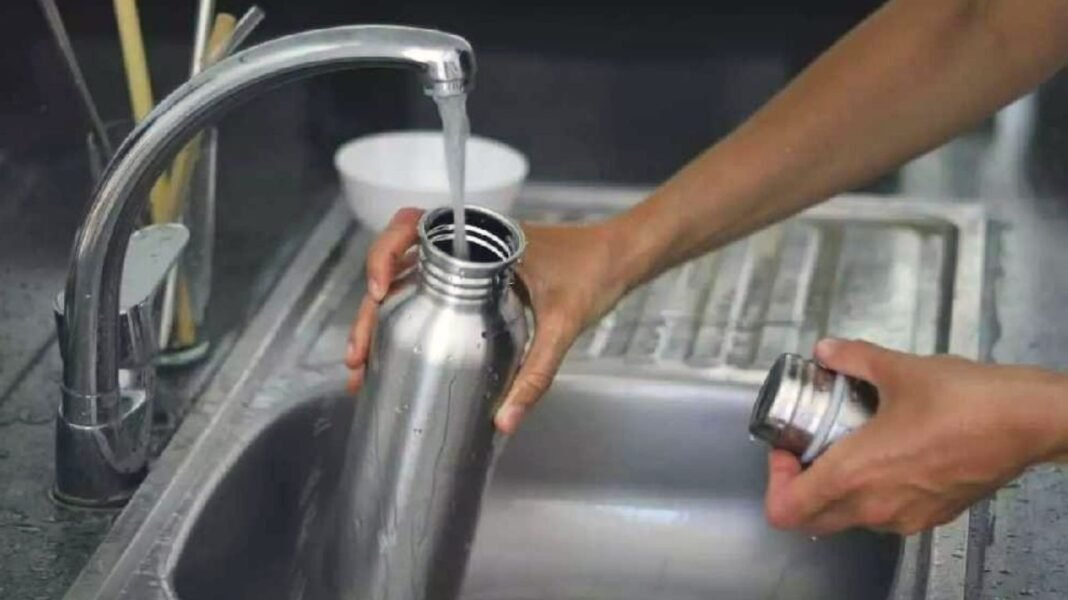
2. Use soap and water: Wash the bottle and each of its parts thoroughly with lukewarm water and dishwashing liquid.
3. Use a narrow brush: A small or narrow brush can be useful for cleaning the bottle’s mouth, lid crevices, threaded or screw parts, and the inside of the straw.
4. Clean the gasket thoroughly: Check for dirt or moisture trapped in the folds and joints of the silicone ring. If necessary, remove it and scrub clean.
5. Rinse thoroughly: After using soap, rinse each part thoroughly with clean water to ensure no detergent residue remains.
6. Dry completely: This is one of the most crucial steps. After washing, leave the bottle, lid, and gasket separate to dry completely. Do not reassemble the lid until all parts are dry.
Many people use home remedies like baking soda or vinegar to eliminate odors. These can be helpful in reducing the smell in some cases. However, if the accumulated dirt, beverage residue, or solidified parts inside the silicone gasket are not cleaned, there is no guarantee that simply using these ingredients will resolve the root cause of the problem. Therefore, before attempting any home remedy, thoroughly cleaning the bottle and all its components is paramount.
However, never mix vinegar with bleach or any other cleaning chemical, as this can produce harmful gases.
Daily Habits to Avoid Odor
Even if you only use water in the bottle, it’s good practice to wash it after each daily use. If you use beverages other than water, such as tea, coffee, juice, milk, or any other drink, extra caution is required when cleaning. Residues from these beverages can quickly accumulate inside the bottle or on the lid, leading to odors. It’s also not advisable to leave beverages inside the bottle with the lid closed for a long time after use.
Deep Clean Once a Week
In addition to daily cleaning, you can thoroughly inspect and clean all parts of the bottle at least once a week. Pay special attention to the lid, silicone gasket, straw, mouthpiece, and the bottle’s mouth for any accumulated dirt. If a silicone part has a persistent odor, fungal stains, or wear that doesn’t go away even after cleaning, it’s advisable to replace that part according to the manufacturer’s recommendations.
Simple Rules for Keeping Your Bottle Clean
- Wash the bottle after every use.
- If you store beverages other than water, clean it promptly.
- Clean the lid and gasket separately.
- If there’s a straw or mouthpiece, clean their interiors too.
- Dry each part completely after washing.
- Do not close the bottle lid while it is still wet.
- Avoid using excessively harsh or abrasive materials to clean the steel part of the bottle.
- If the odor repeatedly returns, inspect the gasket or other replaceable parts.
There’s no reason to assume your steel water bottle is ruined just because it has a foul smell. Often, the problem isn’t inside the bottle itself, but hidden in the lid, gasket, straw, or other small components. Therefore, instead of just washing the bottle’s interior, make it a habit to clean each part separately and dry them completely. This will make it easier to keep your bottle clean, fresh, and suitable for use for a long time.
